Pyramid or flat list: how to read an indie fragrance's notes
Staging notes into top, heart and base is a documentation habit rather than a property of the liquid, and in the library the split cuts across oils, attars and eau de parfum alike.
Undernotes4 min readBeginner guide
Open two indie listings side by side and the notes often arrive in different shapes. One sorts them into top, heart and base; the other gives a single flat list with no positions attached. The shape is a choice each house makes about how to document its work, and it changes what a buyer can work out before ordering a sample.
What staging actually claims
Top, heart and base are not three layers poured into a bottle. They are one ranking of the same set of materials by volatility, meaning how fast each evaporates. Wikipedia's entry on perfumery notes describes top notes as small, light molecules that evaporate quickly, heart notes as the more mellow and rounded body of a composition, and base notes as large, heavy molecules that arrive as the heart departs. It cites Poucher's classification, which scores materials from 1 to 14 for top notes, 15 to 60 for the heart and 61 to 100 for the base. The same page dates the pyramid concept to the 19th century, names François Coty, creator of Chypre in 1917, as the figure who popularised it, and observes that the idea of notes is used primarily for the marketing of fine fragrances.
That last point is worth keeping in mind. A pyramid is a claim about construction, written by the person selling the bottle.
Chypre Chrysantheme from Sultan Pasha Attars shows the format doing real work. Six materials sit on top, including lime, bergamot and verbena. Eight sit in the heart: chrysanthemum, hyacinth, two roses, lily of the valley, coffee, clary sage and honey. Sixteen sit in the base, among them oakmoss, civet, ambergris, castoreum, beeswax, labdanum, seaweed and Mysore sandalwood. The ratio is the information. A listing weighted that heavily downwards is describing an opening that functions as a doorway into something much larger.
The split does not follow the bottle
The usual assumption is that sprays get pyramids and oils get flat lists. The library does not support it.
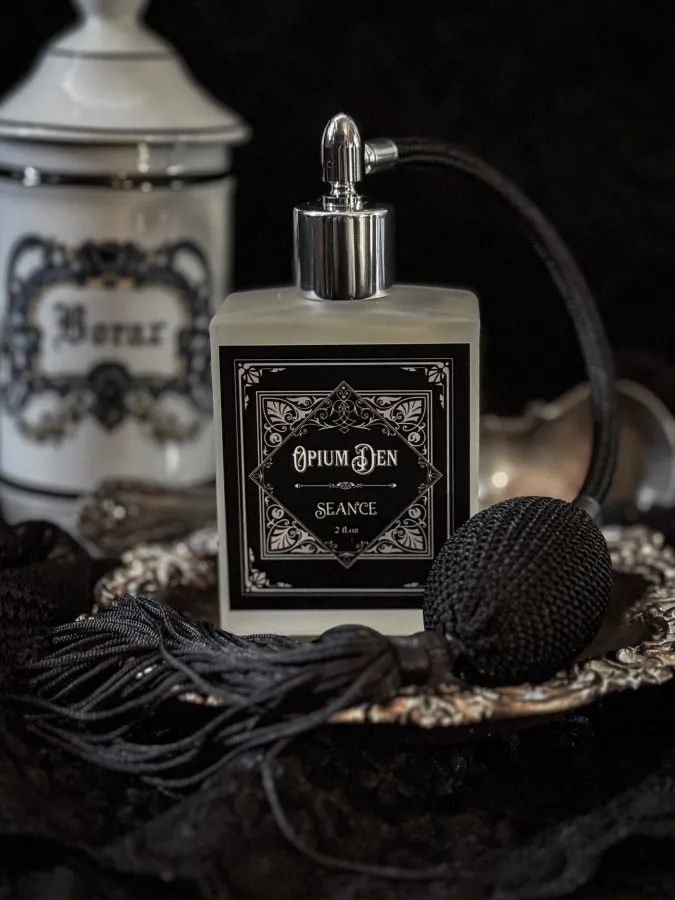
Sultan Pasha's staged listing is an attar, which is oil based. Solis Anima from Possets Perfume is a perfume oil and it stages too: blood orange, lychee tea and screwpine flower on top, tamarind, cucumber, ginger and tomato leaf in the heart, vetiver, kadamba flowers and sandalwood at the base. Meanwhile Seance Perfumes, whose founder Lacey Walker works out of Los Angeles, publishes flat lists for eau de parfum: Opium Den gives frankincense, myrrh, orange blossom, cream, cedar, patchouli, coffee, amber and vanilla in one run, with no positions.
Possets does both. Solis Anima is staged, while Cucumbre, Summer (Wateau) and The God of Olives each list their materials flat. So the format tracks house habit and the kind of composition involved, not the concentration on the label.
Why flat lists are often the honest option
There are two good reasons a maker skips the tiers.
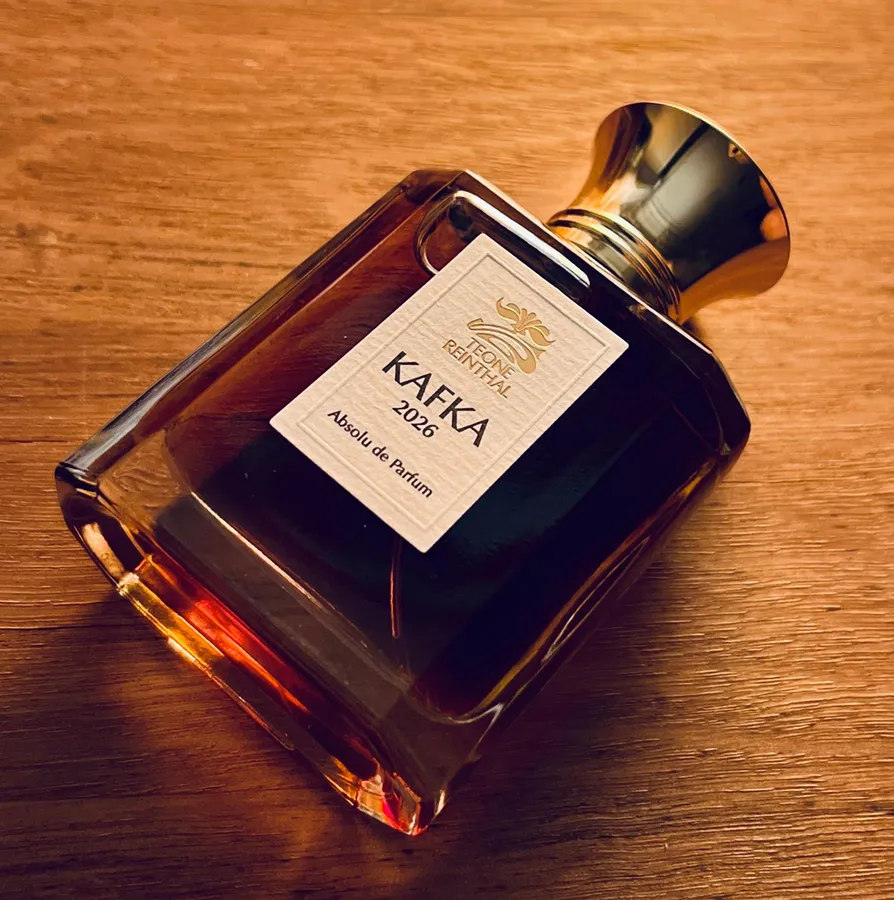
The first is that natural materials resist being sorted. Eden Botanicals, a supplier of naturals to perfumers, states plainly that deciding which category an essential oil or absolute belongs to is highly subjective, gives juniper as a top and/or middle note and angelica as a middle and/or base note, and points out that the answer depends on an oil's volatility relative to everything else in the blend. A house working almost entirely in naturals would be inventing precision by tiering. KAFKA from Teone Reinthal Natural Perfume in Brisbane runs to roughly three dozen materials, including six separate sandalwood entries and seven frankincenses plus a frankincense hydrosol. SANCTUM does something similar with citrus, herbs and resins. A three-part diagram would flatten more than it explains.
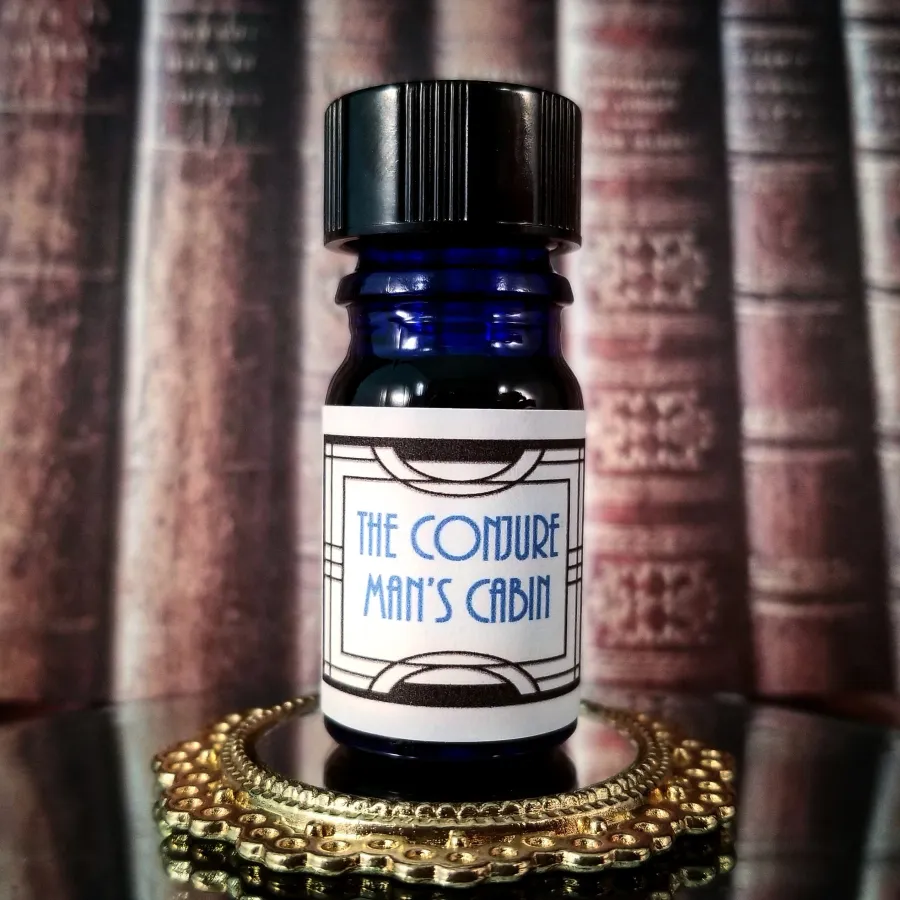
The second reason is that some lists are not material lists at all. The Conjure Man's Cabin from Nui Cobalt Designs in Columbus, Ohio, offers pinyon in the fireplace, ancient leather, copal, vetiver, mud, hay, potent spices simmering, twisted roots hung from the rafters, top shelf hooch, pipe tobacco and Appalachian wilderness. Half of those are images rather than ingredients, and an image has no evaporation rate. Read as a scene it is clear enough, and most of what it names is heavy: leather, resin, root, tobacco.
Reading either format
A few habits make both shapes useful.
- In a staged list, count the base. Chypre Chrysantheme carries sixteen base materials against six on top; Solis Anima carries three against three, with fruit and tea leading. The first is built downwards, the second is built to be bright at the front.
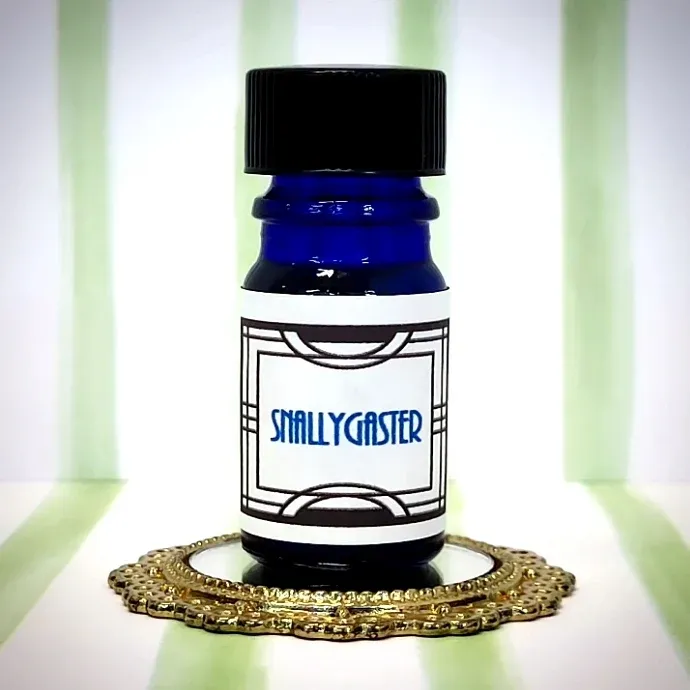
- In a flat list, sort it independently. Citrus, herbs and ozonic effects behave as openers; resins, woods and musks behave as the floor. Lightning Storm splits cleanly on that test, with petrichor, ozone, bergamot and lime zest on one side and teak, Indian myrrh, copal smoke and musk on the other. Snallygaster sorts the same way: bergamot and neroli up front, cherrywood bark and musk underneath.
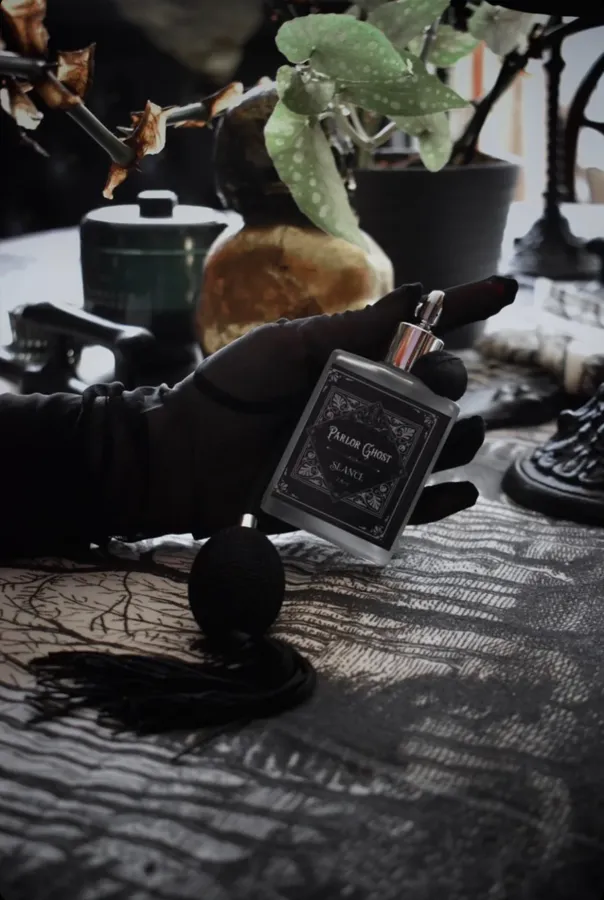
- Watch the short lists. Parlor Ghost names three things, black tea, bergamot and lavender, and a pyramid would add nothing to that. Brevity is not omission.
- Use the note pages to calibrate. Bergamot appears in 281 fragrances in the library, musk in 410, amber in 447. Seeing where a familiar material sits in a staged listing makes it easier to place in an unstaged one.
Neither format says anything about how a fragrance will behave once it is on. Both describe what went in, and in which order the maker thinks about it.
Where to start
- Solis Anima by Possets Perfume, $24–$95. A perfume oil with a full top, heart and base breakdown, useful for anyone who wants to compare the staged format against an oil rather than a spray.
- Parlor Ghost by Seance Perfumes, $32–$125. Three notes, listed flat, for a reader who wants to test how much a short unstaged list can tell them.
- Chypre Chrysantheme by Sultan Pasha Attars, $68.92–$620.26, with 1ml at $68.92. Thirty materials in classical pyramid form, for anyone who wants to see the structure at full scale before deciding whether the diagram helps them.