
Perfumes named after books: titles tested against the notes
Horla, Melisande, Paracelsus and Bibliotheca borrow from Maupassant, Maeterlinck, Renaissance alchemy and the reading room, and the note lists only sometimes follow.
Undernotes5 min readTrend
The pattern in the new arrivals
A Maupassant story, a Maeterlinck play, a Fitzgerald novel and a Byron poem all have perfumes named after them in this library. A name is the one field a maker fills in freely; the note list is the part that has to be true. Reading one against the other shows whether a literary title is a description or a decoration.
Three houses arrived on 8 November, and borrowed titles are the clearest habit they share. January Scent Project, run by John Biebel in Pawtucket, Rhode Island, has Horla. Deconstructing Eden, run by Toni Sinclair, has Melisande and Cesare Borgia; Sinclair's own account of the line says it draws from "music, mythology, literature, history, places". LIZ ZORN SOIVOHLE, hand-blended in Morrow, Ohio, has PARACELSUS. Two longer-standing residents do the same thing: Bibliotheca and The Beautiful and the Damned from Alkemia Perfumes in Western Massachusetts, and Lord Byron-She Walks In Beauty, Like The Night… from the Cincinnati oil house Possets Perfume.
Where the title and the formula agree
Bibliotheca is the most literal of the group, and it cheats cleverly: the note list is furniture rather than materials. Leatherbound books, plush club chairs, polished mahogany tables, fountain pen ink, vinyl records, tweedy woolens. The actual perfumery sits underneath, in black tea, plum brandy, vetiver, rosewood, artemisia, carnation, lavender water, citron and oakmoss. The library files it animalic, woody and earthy, which is what that pile of leather, moss and tea should do. The name is a room rather than a book, and the formula agrees with it.
The Beautiful and the Damned keeps Fitzgerald's 1922 novel about Anthony and Gloria Patch, who waste their time and his expected inheritance in Jazz Age New York, and adds a stray definite article. Alkemia splits the title down the middle: champagne aldehydes and blonde tobacco for the party, honey caramel, cocoa and vanilla for the decline, then opoponax, copal, guaiac wood and copaiba balsam holding it together. Filed gourmand, amber and spicy. Decadence written as sweetness is a fair reading.
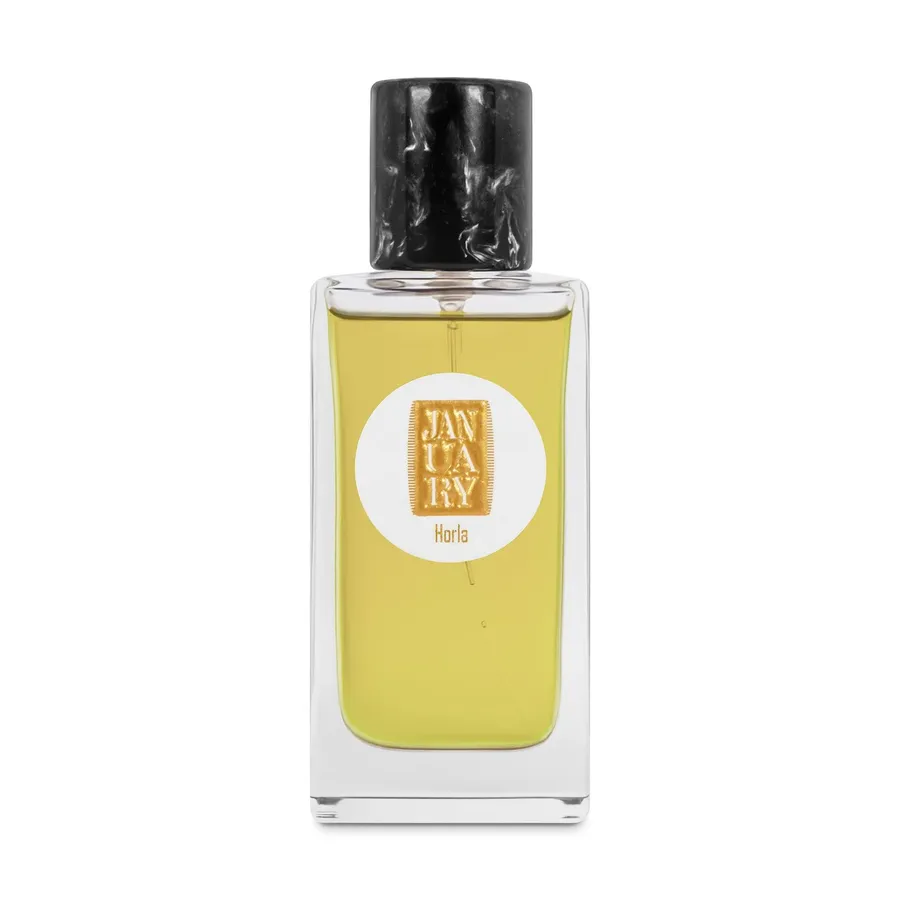
Horla shares its name with Maupassant's 1887 story, in which an invisible presence torments the narrator and neither he nor the reader can settle whether it is real. The notes are gourmand, spicy and animalic: aldehydes, bergamot, almond, milk, viburnum, West Indies bay leaf, Indonesian nutmeg and ylang-ylang over coffee, civet, styrax, tonka bean, sandalwood, vetiver and patchouli. Milk and almond are nursery materials. Civet and coffee are not. A domestic smell with something else living inside it is about as close as a note list gets to that story. One size, $145.
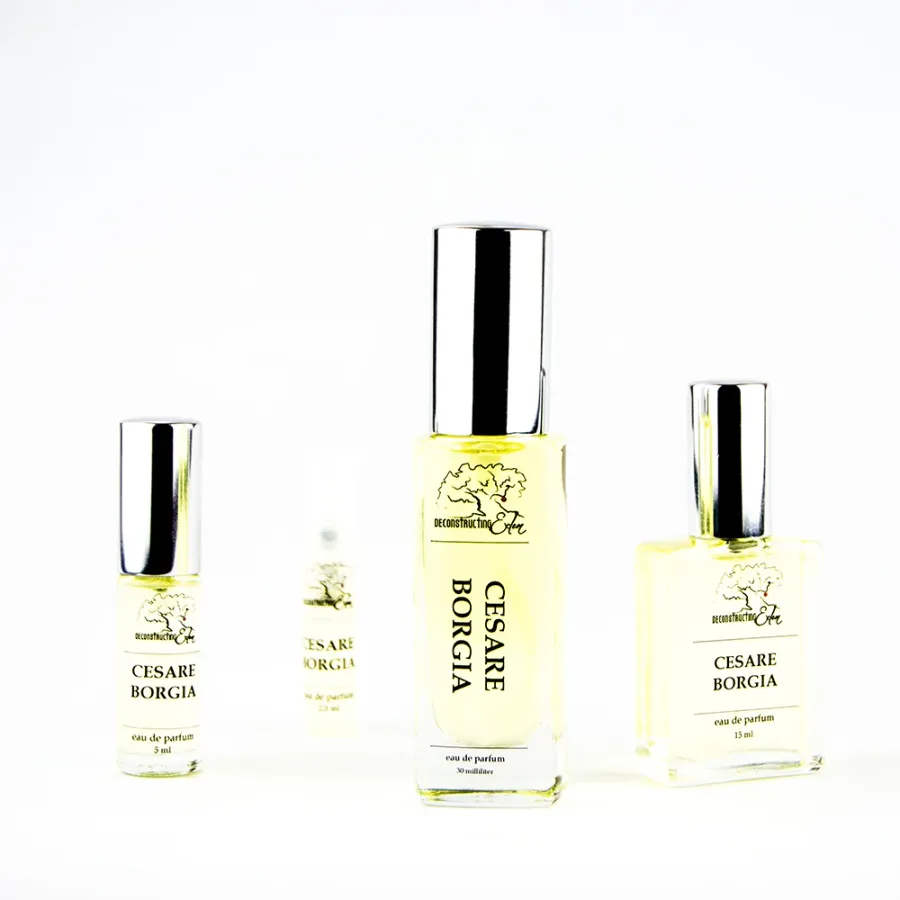
Cesare Borgia is history rather than fiction, and here the name does the work on the notes instead of the other way round. The heart is a kitchen garden of sage, rosemary, basil, thyme and lavender, over leather, oak and what the house calls a silky animalic musk, with bergamot, plum and spices on top. Read as a herbal, it is a conventional barbershop structure. Read under a Borgia's name, the herbs begin to look like a dispensary.
Where they pull apart
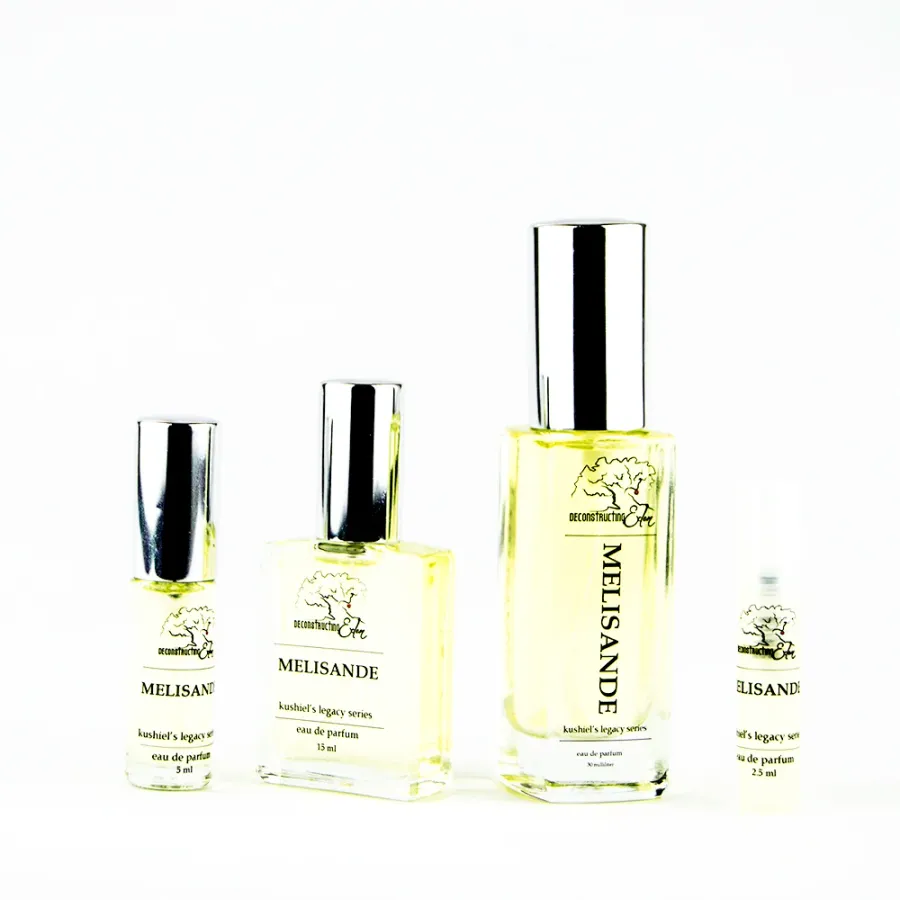
Melisande is the sharpest mismatch. Maeterlinck's play, premiered in 1893, opens with Golaud finding her weeping beside a stream in a forest, her crown dropped into the water; a ring lost at a fountain follows later. Deconstructing Eden's Melisande is spicy, amber and white-floral: cinnamon, ginger, spices, sambac jasmine, tuberose, amber, ambergris, Egyptian musk, mahogany, agar, precious resins, patchouli, leather and, as listed, "a chypre". Dense and resinous, with nothing wet in it. Anyone shopping the name for something pale and watery wants the same house's Doomed, which the library files as aquatic. Melisande starts at $4.90 for 2.5ml.
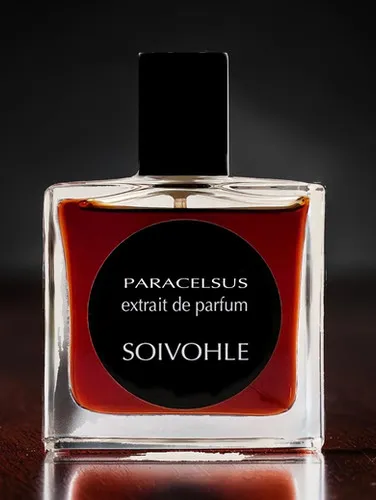
PARACELSUS is half-covered by its name. The historical Paracelsus was a Swiss physician and alchemist, born around 1493 and dead in 1541, and is often called the father of toxicology. Zorn's $8 extrait holds cepes, dark chocolate, tobacco, moss, cedar, patchouli and woods, which is a convincing laboratory floor. It also opens on bergamot, alpha ionone, rose, ylang-ylang and geranium, a powdery violet-rose register with no alchemy in it. Whether the rose nods to Borges's story "The Rose of Paracelsus" is not stated in the listing.
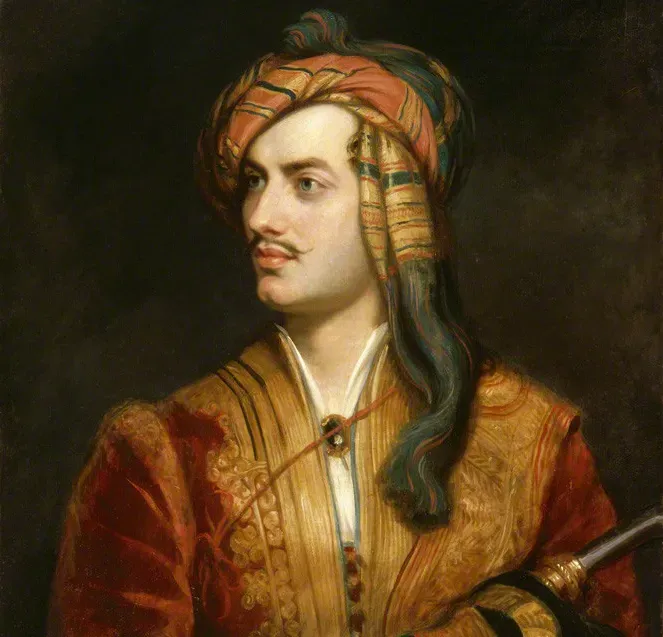
Possets takes its title straight from Byron's poem, written in 1814 after he met Anne Beatrix Wilmot at a London party and printed in Hebrew Melodies the following year. The poem praises a calm, dark beauty. The oil is woody, herbal and musky: oude, Arabian oude, sandalwood, black tea, petitgrain, elemi, silk essence, artemisia, rue, and "a musk which only has a number not a name". Oud and black tea carry "like the night" well enough. Artemisia and rue are bitter churchyard herbs, and there is no bitterness anywhere in the poem. It is the most interesting disagreement here, and $24 at the smaller size.
Using a literary name as a search handle
A borrowed title is a good entry point and a poor filter. Three ways to turn one into something the library can sort on.
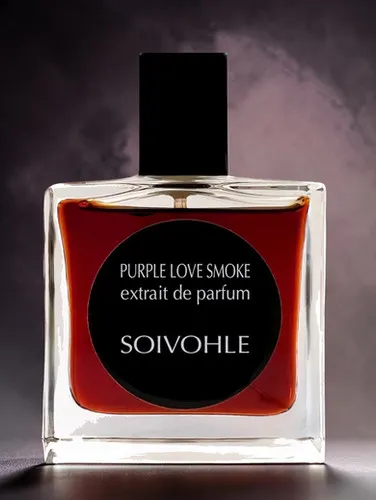
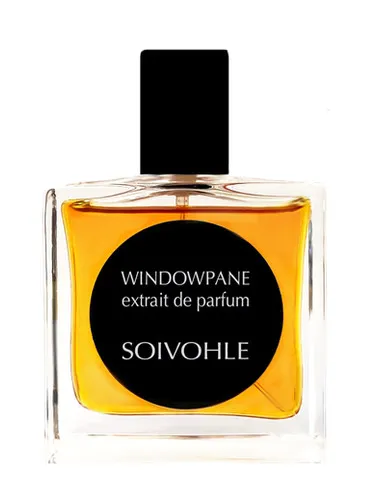
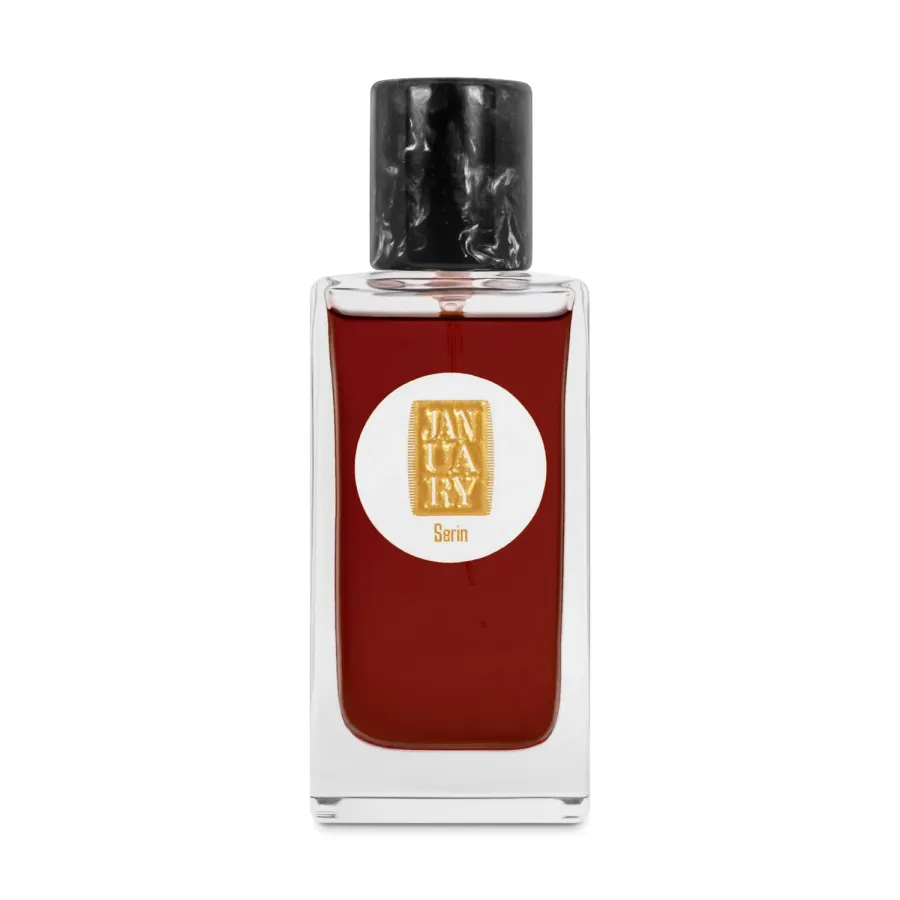
- Follow a note out of the fragrance that caught you. Rose runs through 459 fragrances here. The rose-and-tobacco heart of PARACELSUS turns up differently in Soivohle's PURPLE LOVE SMOKE at $10, with Parma violets and choya loban, and in WINDOWPANE at $8, where iris and orris root butter take over. For the smoky gothic version, January Scent Project's Serin sets rose against smoke and burnt wood at $145.
- Follow the family with a price ceiling. Bibliotheca's territory is where patchouli tends to live, so earthy fragrances under $25 is a more productive query than any book title.
- Follow the house. If the Fitzgerald one lands, Alkemia's darker corner holds Hell Courtisan, with nicotiana noctiflora, opium and brimstone, and Venym, with saffron infused oud, Darjeeling tea and ebony. Both start at $20.
A title tells you what the maker was reading. The note list tells you what is in the bottle. Only one of those two is searchable.
Where to start
- Bibliotheca, $20 for 5ml extrait: for the reader who wants the room rather than the plot.
- PARACELSUS, $8: the cheapest way to find out how much a literary title really predicts.
- Horla, $145: milk, almond, coffee and civet, for anyone who wants the uncanny reading taken seriously.